
When you’ve spotted a development opportunity, it’s tempting to get straight into the design. But the decisions made at the beginning have the greatest influence on the project’s cost, programme and outcome. It’s worth giving them time.
Peak start by asking questions. Does the brief address the right problem? What could the site deliver? Where are the risks, and how do the options compare on cost?
Early feasibility gives us room to explore those questions while changing direction is still relatively straightforward. As the project progresses, more decisions are fixed and commitments made. Revisiting them takes more effort, costs more and can delay progress.
A considered start can feel slower. But testing the assumptions early helps you choose a sound direction before you commit and reduces the risk of costly changes later.
Your brief is the starting point for understanding your ambitions. It might set out the accommodation you need, the number of homes you want to develop or the changes you’d like to make to an existing building.
We’ll also ask what’s behind those requirements.
An extension might be one way to create more usable space. Reorganising what’s already there could be another. A development brief might aim for a particular number of units, but a different mix or layout could make better use of the site and better serve its intended market.
These are possibilities worth exploring early.
We bring an experienced, objective view, helping you test your assumptions and consider approaches you might not have considered. Sometimes that confirms the original brief. Sometimes it helps us refine it. And sometimes it reveals a different way to solve the problem.
Every site has its own character. Understanding it is essential to finding an approach that works.
Trees, access, neighbouring buildings, gradients and established building lines can all influence a proposal. So can the site’s surroundings and its planning history. Previous applications and decisions may offer useful insight into what’s been explored before and the issues a new scheme will need to address.
There are opportunities to find, too. A layout that makes better use of the site and supports greater density. Views that add appeal and value. Site levels that work for access or parking. An existing building that could be adapted or extended to unlock further development potential.
Reading the site carefully helps us work with those characteristics. It can also reveal where further information is needed before an idea is taken too far.
There’s rarely only one way to achieve a brief.
Feasibility allows us to compare different approaches without becoming too attached to the first solution. That might mean testing alternative positions for a building, exploring different layouts or considering how much of an existing structure to retain.
We can also look at whether the brief could be rationalised: making spaces work harder, reducing unnecessary floor area or simplifying an arrangement without losing what matters to you.
The aim is to develop meaningful options and understand their implications. What does each offer? What compromises does it involve? Which responds best to your priorities and the site?
Those comparisons give you a stronger basis for deciding how to proceed.

Comparing options means looking beyond the potential sales value. A scheme may offer a higher gross development value (GDV), but the additional cost, planning uncertainty or other constraints could outweigh the benefit. Bringing design, cost and agents’ market advice together helps clients judge whether the potential uplift justifies the risks involved.
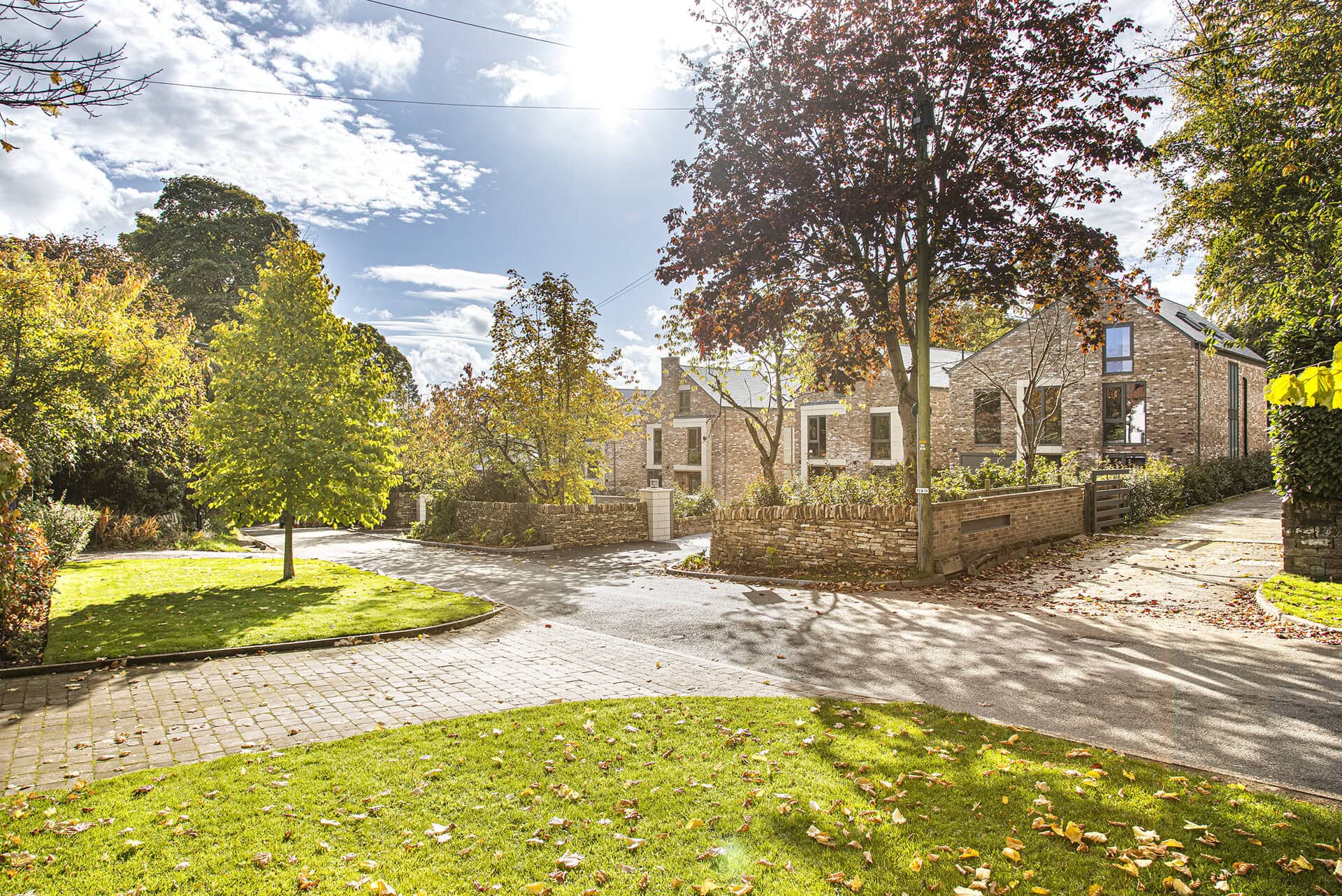
At Whirlow Lane in Sheffield, we tested four approaches: retaining the existing house and creating an additional building plot, replacing it with two or four houses, or developing 12 apartments.
Using sales valuations from local agents, we compared indicative development costs, potential GDV and the land value each option could generate.
The apartment scheme produced the highest assessed land value, but offered only a modest uplift over the four-house option. Taking account of planning risk, restrictive covenant constraints and the practicalities of delivery, four new detached houses emerged as the preferred approach.
Testing these options early helped the client choose a direction that balanced potential value with the risks involved in achieving it.

Different solutions come with different cost implications. It makes sense to consider them while the options are still open.
A proposal that delivers more floor area may also require more complex construction. Working with a steep site might offer design opportunities while adding structural or access costs. Retaining an existing building could have benefits, but its condition and suitability need consideration.
Early cost advice helps connect design choices with the available budget. It can highlight the main cost drivers, identify uncertainties and help you decide where investment will have the greatest value.
The figures will become more detailed as the project develops. At feasibility stage, they help us test whether a direction is realistic before significant time is spent developing it.
The team needed for feasibility depends on the project.
For a straightforward proposal, an architectural appraisal may be enough to establish the next steps. A more complex site or conversion may benefit from early input from a planning consultant, cost consultant, engineer or another specialist. Local agents can also advise on demand, unit mix and likely sales values, helping us test whether the proposals suit their intended market.
We’ll advise where that input could make a meaningful difference. If access, structural suitability or a planning issue could fundamentally shape the project, understanding it early helps avoid building a proposal around an uncertain assumption.
The scope should be proportionate, with attention focused on the questions that matter most.

Early feasibility puts time, thought and the right advice into the stage where they can make the greatest difference. Testing the brief, exploring options and understanding the relationship between cost, value and risk gives you a stronger basis for deciding how to proceed.
That can feel like a slower start. But giving those early decisions the attention they deserve improves the chances of a smoother project, with fewer costly surprises along the way.
Peak can help you understand what’s possible and choose a sound direction before committing significant time and money.

By Alasdair Struthers